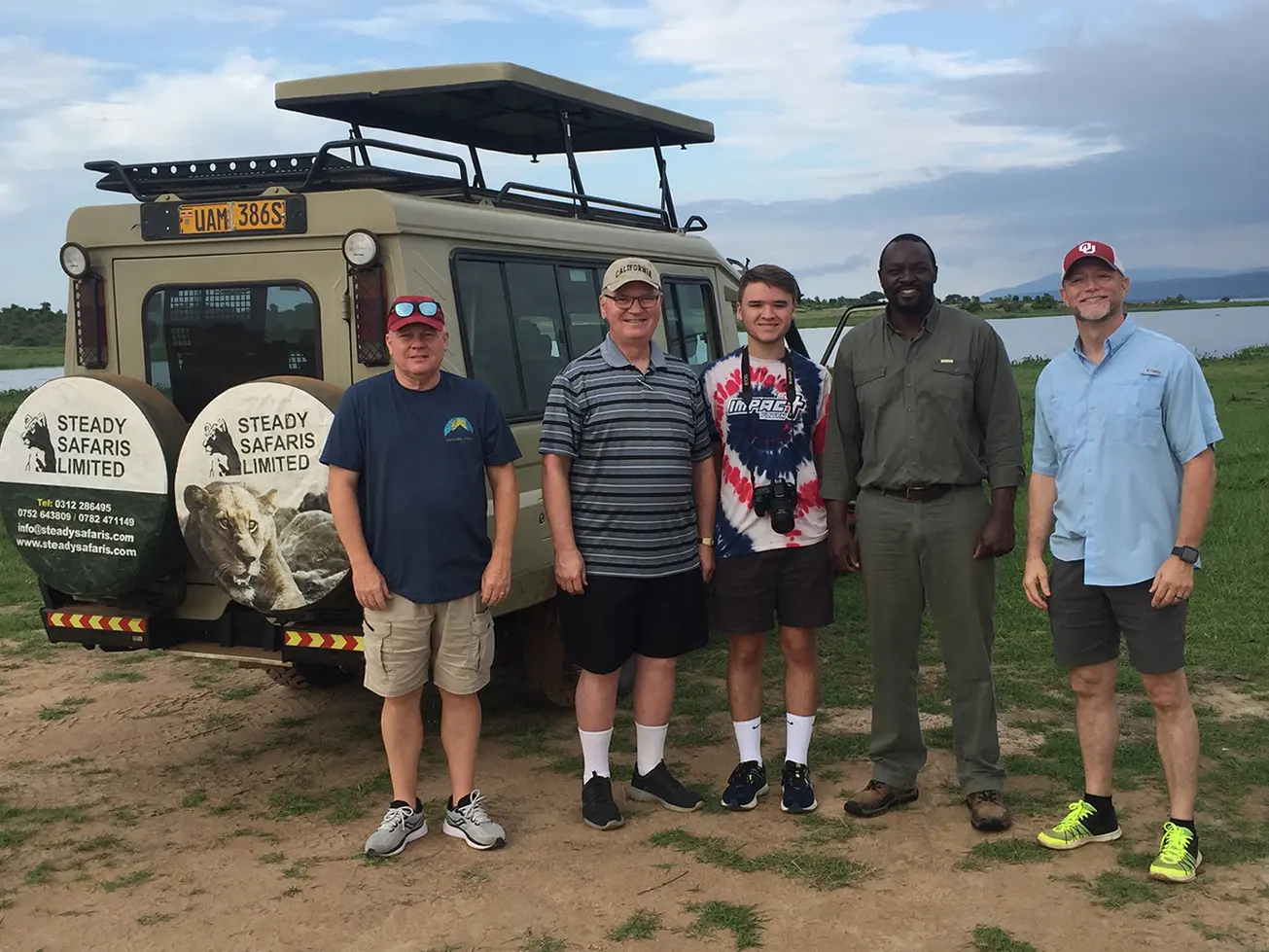
Happy Clients Reviews
This was our second trip with Carlos & Steady Safari, and it was just as fun as the first. I travelled with the same travelling buddy - both of us females - and Carlos always makes us feel safe and cared for during the journey. July 4th 2025
LEE, ARKANSAS USAMy wife and I spent a thoroughly enjoyable week with Carlos, split between Queen Elizabeth Park and Bwindi Impenetrable Forest. He is delightful company, giving us great insights into the country and its culture. Date of experience: 12 Feb 2025
PROF RICHARD CHANDLER CALIFORNIAOur family of 5 has just returned from 7 days safari with Steady Safaris Ltd. Our guide was Carlos, who organized the itinerary for the trip. We gave him an idea of what we would like to do, and he then came back with his expertise. Date of experience: 28 March 2025
JOANNE UK, YorkMagnificent Experience didn't disappoint! Our trip to Murchison Falls national park in Uganda was the third experience we have enjoyed with Steady Safaris Limited. They do what they do do VERY well! I can book with complete confidence that they have researched each trip and every option to be the best on offer. Date of experience: 28 April 2025
GEORGINA, FLORIDA, USAGreat experience with Carlos and Steady Safaris Limited Highly recommending Carlos and Steady Safaris Limited to anyone who needs little or a lot of help with their trip planning. Carlos came to the rescue when I was going nowhere in trying to plan for our Uganda trip. He was the only one that actually called me back after I submitted so many quote/inquiry emails with other agencies I found online. Date of experience: 01 April 2025
LILY, SOUTH CAROLINA, USA
3 Days Murchison Falls Safari
Planning a 3 days Murchison Falls safari offers one of East Africa's most rewarding wildlife experiences. Located in northwestern Uganda, Murchison Falls National Park spans 3,840 square kilometers of diverse ecosystems where the mighty Nile River explodes through a narrow gorge, creating the world's most powerful waterfall. This comprehensive guide draws from extensive field experience to help you maximize your three-day adventure in Uganda's largest and oldest conservation area.
The park protects 76 mammal species and 451 bird species, making it a premier destination for photographers, nature enthusiasts, and adventure seekers. Whether you're watching elephants wade through the Victoria Nile, tracking lions across savannah grasslands, or witnessing the thunderous falls that gave the park its name. A well-planned 3 days Murchison Falls safari itinerary ensures you experience the full spectrum of what Murchison Falls offers.
Understanding Murchison Falls National Park
Murchison Falls National Park represents Uganda's flagship conservation success story. Established in 1952, the park has recovered remarkably from decades of poaching, particularly during the 1980s. Today, wildlife populations thrive under improved management, making it an increasingly popular safari destination that rivals Kenya and Tanzania in wildlife density.
The park's geography creates distinct zones. North of the Nile, open savannah dominates, providing excellent game viewing conditions. South of the river, woodland and forest habitats shelter different species. The Nile itself serves as a natural wildlife corridor, supporting hippos, crocodiles, and countless water birds.
The famous Murchison Falls forces the entire Nile River through a seven-meter gap in the rocks, plunging 43 meters below. The resulting spray and roar can be heard from kilometers away. This geological wonder serves as the park's centerpiece and remains a highlight of any visit.
Why Choose a 3 Days Murchison Falls Wildlife Safari
Three days represents the optimal duration for exploring Murchison Falls comprehensively. Single-day visits feel rushed and miss essential experiences, while two days provide limited flexibility. A three-day itinerary allows proper immersion without feeling hurried.
The extended timeframe enables multiple game drives, increasing wildlife encounter opportunities significantly. Morning drives catch predators during active hunting periods. Evening drives coincide with peak animal movement as temperatures cool. This variety dramatically improves your chances of spotting the Big Five members present here: lions, leopards, elephants, and buffaloes.
A 3 days Murchison Falls Uganda safari also accommodates the spectacular launch cruise to the falls' base. This three-hour journey ranks among Africa's finest boat safaris, positioning you meters from hippos, crocodiles, and elephants drinking at the riverbank. The combination of water and land-based activities provides diverse perspectives impossible to achieve in shorter visits.
Weather patterns favor three-day trips. Uganda's equatorial climate means brief afternoon showers occur even during dry seasons. Extra days buffer against weather disruptions while ensuring you complete all planned activities. This flexibility proves invaluable when traveling between December and February or June through September, the optimal safari months.
Detailed Day-by-Day Itinerary
Day 1: Kampala to Murchison Falls National Park
Your 3 days Murchison falls safari begins early from Kampala, Uganda's capital. The 305-kilometer journey typically requires five to six hours, though road conditions and stops affect timing. Departure by 6:30 AM ensures mid-afternoon arrival with time for activities.
The route travels northwest through Luwero, passing pineapple plantations and traditional homesteads that showcase rural Ugandan life. A strategic stop at Ziwa Rhino Sanctuary adds significant value to your journey. Located 176 kilometers from Kampala, this conservation project reintroduces white rhinos to Uganda after local extinction during civil conflicts.
Rhino tracking at Ziwa takes approximately two hours. Rangers guide small groups through savannah and wetland areas where these magnificent animals graze. The experience positions you within meters of rhinos in their natural habitat, providing extraordinary photographic opportunities. This addition makes your safari a Big Five experience, as Murchison Falls itself no longer hosts rhinos.

Continuing toward Murchison Falls, lunch typically occurs in Masindi town, the last major settlement before entering wilderness areas. Local restaurants serve Ugandan cuisine, offering dishes like matoke (steamed plantains), groundnut sauce, and fresh Nile perch. This cultural immersion enhances your safari experience beyond pure wildlife viewing.
Entering Murchison Falls National Park through Kichumbanyobo Gate provides immediate wildlife encounters. Elephants frequently cross roads near park boundaries. Waterbucks, Uganda kobs, and warthogs graze openly, visible from vehicles. The transformation from human habitation to pristine wilderness occurs within minutes, building anticipation for the days ahead.
Afternoon activities depend on arrival time. Many operators include a sunset game drive en route to your lodge. These abbreviated drives introduce you to park geography while providing initial wildlife encounters. The golden hour light creates exceptional conditions for photography, particularly when animals emerge from daytime shade to feed.
Lodge check-in occurs before dark. Accommodations range from budget camping to luxury lodges, with options scattered across the park. Evening relaxation at your lodge allows reflection on the day's experiences while preparing for tomorrow's early start. Most lodges position you near the Nile, where hippo grunts and nightjar calls create an authentic African soundscape.
Day 2: Full Day Game Drives and Launch Cruise
Day two represents the centerpiece of your 3 days Murchison Falls wildlife safari. An early wake-up call, typically around 6:00 AM, ensures you reach prime game viewing areas as animals remain active in cool morning temperatures.
The morning game drive explores the northern bank's savannah grasslands, the park's wildlife hotspot. Your experienced guide navigates tracks that maximize encounter opportunities. Lions, often spotted resting under acacia trees or termite mounds, become more visible as the sun rises. Lionesses with cubs represent particularly rewarding sightings, showcasing natural maternal behaviors.
Leopards, though elusive, occasionally appear in riverine forests or draped across tree branches. Their spotted coats provide perfect camouflage, requiring sharp eyes and local knowledge to locate. Your guide interprets animal tracks, scat, and alarm calls to predict leopard locations, though sightings always involve some luck.
Elephant herds dominate many areas, particularly near water sources. Family groups led by matriarchs demonstrate complex social behaviors. Watching elephants interact, especially when young calves play and learn from older members, provides insight into their intelligence and emotional depth. These gentle giants, once nearly extinct in Murchison Falls, now number over 1,300 individuals.
Buffalo herds, sometimes exceeding 100 individuals, graze across open plains. These unpredictable animals require respectful distance. Your guide maintains safe viewing positions while explaining buffalo social structures and defense mechanisms. Bulls, called "dagga boys," often separate from herds, spending solitary days wallowing in mud.
Antelope species provide constant viewing pleasure. Uganda kobs, the park's most numerous antelope, gather in breeding grounds called leks where males compete for female attention. Waterbucks prefer areas near water, distinguished by their white circular rump markings. Jackson's hartebeests, endemic to Uganda, graze openly, while oribi, the smallest antelope present, require careful observation to spot.
Rothschild giraffes, one of the world's most endangered giraffe subspecies, move gracefully across the landscape. Murchison Falls protects Uganda's entire wild population of these distinctive animals, identifiable by their leg markings that don't extend below the knees. Watching them browse acacia trees, their long tongues carefully selecting leaves, demonstrates remarkable adaptation.
The morning drive concludes around 11:00 AM as temperatures rise and animals seek shade. Return to your lodge for lunch provides welcome respite. Most accommodations serve buffet-style meals featuring international and local cuisine. Rest during the afternoon heat follows animal behavior patterns, conserving energy for evening activities.
The afternoon launch cruise departs around 2:00 PM from Paraa or nearby jetties. This three-hour journey upstream toward Murchison Falls represents many visitors' highlight. Boarding a covered boat with tiered seating, you cruise the Victoria Nile's calm waters with unobstructed wildlife views.
Hippo pods congregate in deeper pools, sometimes numbering 50 or more individuals. These massive animals, weighing up to 4,000 kilograms, spend days submerged to protect sensitive skin from sun damage. Watching them yawn, revealing enormous teeth, reminds you of their territorial aggression despite seemingly docile appearances. Hippos kill more people annually than any other large African animal.
Nile crocodiles bask on riverbanks, some exceeding five meters in length. These ancient reptiles, unchanged for millions of years, demonstrate perfect predatory adaptation. Your guide explains their hunting strategies, seasonal behaviors, and conservation status. The Nile crocodile population in Murchison Falls ranks among Africa's healthiest.
Elephants drinking at the river provide extraordinary photo opportunities. Family groups approach cautiously, scanning for threats before allowing vulnerable young to drink. Watching elephants use trunks to spray water over bodies or playfully push each other creates lasting memories. The boat positions you at their level, unlike elevated land-based viewing.
Bird diversity along the river astounds even casual observers. Goliath herons, the world's largest heron species, stand motionless hunting fish. African fish eagles, with distinctive white heads and chestnut bodies, perch prominently while their haunting calls echo across water. Malachite kingfishers, jewel-like in iridescent blues and oranges, dart between perches hunting small fish.
The boat approaches as close as safely possible to Murchison Falls' base. The Nile's entire volume channels through the narrow gorge, creating deafening noise and perpetual mist. Rainbows form in afternoon sunlight filtering through spray. The raw power of nature, concentrated in this single point, leaves visitors awestruck. Understanding that this single waterfall has carved this gorge over millennia provides geological perspective.
Evening game drives commence after the cruise, around 5:30 PM. Many animals, inactive during midday heat, emerge to feed in cooler temperatures. Predators, particularly lions and leopards, become more active. This drive follows different routes than morning excursions, exploring new areas and increasing species diversity.
Nocturnal animals like spotted hyenas and African civets occasionally appear as darkness approaches. Your guide uses spotlights where permitted, illuminating animals' reflective eyes in the darkness. Nightjars sweep low over tracks catching insects. The transformation from day to night in African wilderness provides sensory immersion impossible to replicate elsewhere.
Day 3: Top of the Falls and Return Journey
The final day balances completing must-see experiences with allowing adequate return time to Kampala. After breakfast, you visit the top of Murchison Falls, a perspective completely different from yesterday's base view.
A short drive from most lodges reaches the viewing area. A brief walk through euphoria forest leads to observation points where the Nile thunders through its narrow channel. Standing above the falls, you witness the river's transformation from placid width to violent compression. The ground vibrates from water's force. Spray drenches anyone approaching too close.
Multiple viewpoints allow different perspectives. The "devil's cauldron," where water churns violently after falling, creates perpetual mist and roaring sound. Photographers find morning light optimal, though any time provides spectacular views. Safety barriers prevent accidents, though caution remains essential on wet, slippery rocks.
Wildlife sightings continue even here. Baboons frequent these areas, sometimes habituated to human presence. Forest birds, including various sunbird species, feed on flowering plants. The contrast between delicate wildlife and powerful natural forces creates memorable juxtaposition.
The final game drive occurs during your exit route. Many visitors see additional species on departure drives, as animal populations distribute across large areas. Your accumulated park knowledge from previous days makes species identification easier, enhancing appreciation for ecosystem complexity.
Exiting through the same or alternative gates, you begin the return journey to Kampala. Strategic lunch stops in Masindi provide final opportunities to purchase local crafts and souvenirs. Roadside vendors sell handmade baskets, wood carvings, and traditional instruments. These purchases support local communities while providing authentic mementos.
Arrival in Kampala typically occurs between 6:00 PM and 8:00 PM, depending on traffic and stops. Evening flights from Entebbe International Airport remain achievable, though overnight accommodation proves less stressful. The journey concludes, but memories of your Murchison Falls safari endure.
Accommodation Options for Every Budget
Luxury Lodges
Luxury accommodations in Murchison Falls combine comfort with strategic positioning for wildlife viewing. Paraa Safari Lodge, the park's oldest accommodation, overlooks the Nile with rooms featuring private balconies. Extensive grounds attract wildlife, making pre-breakfast game viewing possible without leaving the lodge. Facilities include swimming pools, spa services, and fine dining restaurants.
Chobe Safari Lodge occupies a similar prime location with panoramic river views. Spacious cottages with contemporary African design feature air conditioning, ensuring comfort despite tropical heat. The lodge's elevated position provides sunset vistas while hippo calls create evening ambiance. Full-board packages include all meals and selected beverages.
Nile Safari Lodge, positioned on the southern bank, offers exclusive tranquility. Only ten tented cottages ensure intimate experiences. Each canvas structure includes hardwood floors, ensuite bathrooms with hot showers, and private decks overlooking the Nile. The lodge emphasizes environmental sustainability through solar power and rainwater harvesting. Gourmet meals feature locally sourced ingredients prepared by trained chefs.
Baker's Lodge provides boutique luxury combining colonial charm with modern convenience. Eight bandas (traditional thatched cottages) spread along the riverbank, each individually decorated. The property maintains an intimate atmosphere while offering amenities like plunge pools and outdoor showers. Evening campfires and star-gazing sessions foster guest interaction.
Mid-Range Options
Mid-range accommodations balance comfort with affordability, ideal for budget-conscious travelers prioritizing wildlife experiences over luxury amenities. Pakuba Safari Lodge offers comfortable rooms with electricity, hot water, and mosquito netting. The lodge's bar and restaurant serve hearty meals suitable for safari appetites. Its location near park headquarters provides convenient access to game drive routes.
Murchison River Lodge features thatched cottages in a natural bush setting. Basic but clean facilities include private bathrooms and fans for cooling. The lodge operates a popular campground alongside rooms, creating a community atmosphere among travelers. Dining areas overlook the Nile where animals regularly drink.
Kabalega Wilderness Lodge, located outside park boundaries, provides comfortable accommodation at reduced costs. The lodge's twenty-two rooms maintain standards comparable to in-park facilities while leveraging the lower fees associated with external locations. Guests appreciate the swimming pool and relaxed environment after dusty game drives.
Red Chilli Rest Camp sits strategically near Paraa ferry crossing, offering both permanent tents and simple rooms. The budget-friendly option attracts backpackers and overland tour groups. Communal dining areas and bar create social environments for sharing safari stories. The camp's location allows easy access to both morning and evening game drives.
Budget and Camping Facilities
Budget travelers find several camping and basic accommodation options throughout Murchison Falls. Designated campsites within the park allow visitors to sleep under canvas while maintaining proximity to wildlife. These sites provide basic facilities: shared ablutions, cooking areas, and water points. Security presence ensures safety despite bush locations.
Camping requires appropriate equipment, including tents, sleeping bags, and cooking supplies. Most visitors book through tour operators who provide necessary gear and meals. Independent campers must be self-sufficient, understanding park regulations and safety requirements. Nighttime wildlife sounds, including roaring lions and grunting hippos, provide authentic bush experiences impossible in lodges.
Budget guesthouses in nearby towns like Masindi offer alternatives for cost-conscious travelers. While outside the park, these accommodations reduce overall safari costs. Early departures and late returns maximize park time despite external accommodation. Rooms typically include basic amenities: beds, mosquito nets, and shared bathrooms.
Wildlife Species You Will Encounter
Big Mammals
Lions represent Murchison Falls' apex predators, with the population recovering steadily to approximately 130 individuals. Prides inhabit the northern sector's open grasslands where hunting success rates remain high. Tree-climbing lions occasionally appear, though this behavior occurs more commonly in Uganda's Queen Elizabeth National Park. Morning game drives provide optimal viewing when lions remain active.
Leopards, more solitary and elusive than lions, number roughly 50 individuals. These adaptable cats occupy diverse habitats, from riverine forests to rocky outcrops. Leopards often rest in trees during daylight, their spotted coats providing excellent camouflage against dappled light. Sightings require patience and experienced guides who recognize their preferred territories.
African elephants form the park's largest mammal population. Herds range from small family units to gatherings exceeding 50 individuals. Matriarchal societies demonstrate complex communication and cooperation. Bull elephants wander more independently, joining herds during breeding seasons. Conservation success has increased populations from near extinction to over 1,300 individuals.
Cape buffaloes travel in large herds, sometimes forming super-herds during dry seasons when multiple groups congregate near reliable water sources. These powerful animals display unpredictable temperaments, especially males living separately from main herds. Observing buffalo requires maintaining respectful distances, as they rank among Africa's most dangerous animals when threatened.
Antelope and Herbivores
Uganda kobs, medium-sized antelopes with reddish-brown coats, thrive in Murchison Falls' grasslands. Males establish breeding territories called leks where they compete for mating opportunities. Watching territorial displays, where males posture and occasionally fight, demonstrates natural selection processes. Kobs serve as primary prey for large predators, maintaining ecosystem balance.
Waterbucks prefer habitats near water, as their name suggests. These large antelopes possess distinctive white rings on rumps, creating easy identification. Their coarse, greasy coats repel water and produce a strong odor that discourages some predators. Herds typically number five to twenty individuals led by dominant males.
Jackson's hartebeests, endemic to Uganda and neighboring regions, inhabit open grasslands. These ungainly-looking antelopes possess characteristic elongated faces and uniquely shaped horns. Once endangered, populations have recovered under protection. Their preference for short grass areas created by fires and grazing makes them commonly visible during game drives.
Oribi, among Africa's smallest antelopes, require careful observation to spot. These graceful animals prefer areas with tall grass providing cover from predators. Males defend territories aggressively despite diminutive size. Watching them pronk (jump) through grass with stiff-legged bounces demonstrates their predator evasion strategies.
Rothschild giraffes move gracefully across landscapes, their towering height providing visual continuity. These critically endangered animals exist almost entirely in Uganda and western Kenya. Murchison Falls protects significant populations, making sightings virtually guaranteed. Watching them browse acacia trees, carefully selecting leaves despite thorns, showcases evolutionary adaptation.
Primates and Smaller Mammals
Olive baboons form large troops throughout the park, particularly in woodland areas and near human habitation. Social structures centered around dominant males demonstrate complex primate behaviors. Watching troop interactions, including grooming, play, and disciplinary actions, provides insight into our evolutionary relatives. Baboons' opportunistic feeding includes everything from grass seeds to small mammals.
Vervet monkeys occupy similar habitats but form smaller groups. These attractive primates, with distinctive black faces and white fringes, display remarkable intelligence. Their varied alarm calls differentiate between aerial and terrestrial predators. Mothers carrying infants on backs or bellies while foraging demonstrate primate parenting.
Warthogs, despite ungainly appearances, provide endless entertainment. These robust pigs feed by kneeling on calloused front leg pads, reversing away from danger while maintaining visual contact with threats. Males' prominent facial warts and curved tusks serve in combat and display. Watching piglets follow parents, tails held vertically like antennas, creates humorous moments during serious wildlife viewing.
Bushbucks inhabit riverine forests and dense thickets, their shy nature making sightings special. These medium-sized antelopes display beautiful chestnut coats with white spots and stripes. Males carry spiraled horns used in territorial disputes. Their solitary nature contrasts sharply with gregarious Uganda kobs.
River Wildlife
Hippopotamuses aggregate in pods sometimes exceeding 50 individuals in deeper Nile pools. These semi-aquatic mammals spend daylight submerged, emerging at night to graze. Despite herbivorous diets, hippos display aggressive territoriality. Males bear scars from violent battles over mates and territory. Watching pod dynamics, including juveniles learning social hierarchies, provides endless fascination.
Nile crocodiles, prehistoric survivors largely unchanged for millions of years, bask on riverbanks regulating body temperature. These opportunistic predators consume primarily fish but will take mammals approaching water. Large individuals, exceeding five meters, can overpower substantial prey including wildebeest and zebra. The Murchison Falls population ranks among Africa's healthiest, with individuals living 70 years or more.
Bird Species Diversity
Murchison Falls' 451 recorded bird species satisfy ornithologists and casual observers alike. Water birds dominate the Nile ecosystem. Goliath herons, standing 150 centimeters tall, hunt patiently from shallows. Their motionless stalking suddenly erupts when large fish venture within striking distance.
African fish eagles, iconic across sub-Saharan Africa, perch prominently on dead trees overhanging water. Their distinctive call, often described as "the voice of Africa," accompanies sunrise and sunset. Watching them swoop to snatch fish from the water demonstrates remarkable hunting precision.
Shoebills, prehistoric-looking birds standing over one meter tall, inhabit papyrus swamps south of the Nile. These rare birds, more closely related to pelicans than storks despite appearances, hunt lungfish and catfish. Their massive, shoe-shaped bills deliver powerful strikes that stun prey. Finding shoebills requires patience and often specialized excursions into wetland areas.
Malachite kingfishers, diminutive jewels along riverbanks, flash iridescent blue and orange plumage as they dart between perches. Multiple kingfisher species inhabit the park, including pied, giant, and woodland kingfishers. Each occupies specific ecological niches, demonstrating biodiversity within single bird families.
Saddle-billed storks, among the world's tallest storks, wade through shallows searching for fish and frogs. Their striking red, yellow, and black bills create unmistakable identification. These solitary hunters demonstrate patience, standing motionless until prey opportunities arise.
Best Time to Visit Murchison Falls
Dry Season Advantages
The primary dry season, from December through February, provides optimal wildlife viewing conditions. Reduced vegetation allows easier animal spotting, while concentrated water sources draw wildlife to predictable locations. The Nile becomes increasingly important as scattered waterholes dry, concentrating hippos, crocodiles, and drinking mammals.
Morning temperatures remain comfortable during this period, typically ranging from 20 to 25 degrees Celsius at sunrise. Daytime heat increases but rarely becomes unbearable. Clear skies enhance photography, particularly during golden hour periods. Roads maintain better conditions, improving game drive experiences and reducing vehicle breakdowns.
The secondary dry season, June through September, offers similar advantages with some distinctions. This period coincides with Northern Hemisphere summer holidays, increasing visitor numbers. Advanced bookings become essential for preferred accommodations and tour operators. Wildlife viewing remains excellent, though slightly increased vegetation compared to the primary dry season provides more cover.
Wet Season Considerations
The wet season, roughly March through May and October through November, brings afternoon thunderstorms and lush vegetation. While some visitors avoid these periods, they offer distinct advantages for informed travelers. Fewer tourists create more exclusive experiences. Accommodation rates often drop significantly, providing value-conscious travelers with luxury options at mid-range prices.
Birdwatching peaks during wet seasons when migratory species from Europe and North Africa arrive, joining resident species. Breeding plumages make male birds particularly colorful and vocal. Wetland areas expand, attracting water birds in spectacular concentrations. The landscape transforms into vibrant greens, creating beautiful photographic backdrops contrasting with dry season browns.
Wildlife disperses more widely during wet seasons, making sightings require more patience and skill. However, newborn animals appear, including baby elephants, antelopes, and lions. Watching maternal behaviors and vulnerable offspring learning survival skills provides rewarding experiences impossible during dry seasons. Predators remain active, as young animals represent easier prey.
Road conditions deteriorate during heavy rains, particularly on minor tracks. Four-wheel-drive vehicles become essential, and some remote areas may become temporarily inaccessible. Most main roads maintain passable conditions, ensuring core areas remain accessible. Tour operators adjust routes appropriately, maintaining safety while maximizing wildlife encounters.
Essential Packing List
Clothing Requirements
Safari clothing prioritizes functionality over fashion. Neutral colors like khaki, olive, and brown minimize visibility to wildlife while reducing insect attraction. Bright colors, particularly white and blue, attract tsetse flies, while dark colors absorb excessive heat. Cotton and linen fabrics provide comfort in tropical conditions, though modern synthetic materials often dry faster.
Long-sleeved shirts and long trousers protect against sun exposure, thorny vegetation, and insect bites despite warm temperatures. Convert pants with zip-off legs transition easily between morning coolness and afternoon heat. Multiple layers allow adjustment as temperatures change throughout the day.
A wide-brimmed hat protects face and neck from intense equatorial sun. Sunglasses with UV protection prevent eye damage and reduce glare during wildlife viewing. A lightweight rain jacket or poncho prepares for unexpected afternoon showers, particularly during wet season visits.
Sturdy, comfortable walking shoes or light hiking boots provide essential support during nature walks, particularly when hiking to the top of Murchison Falls. The terrain includes uneven rocks and potentially muddy conditions. Closed-toe shoes protect against insects, thorns, and snake encounters. Sandals suffice for lodge relaxation but never for bush activities.
Evening temperatures occasionally drop to 15 degrees Celsius, particularly during dry season nights. A light fleece or sweater provides comfort during early morning game drives when vehicles drive with open sides. Lodges often lack heating, making warm sleeping clothes advisable.
Equipment and Accessories
Binoculars dramatically enhance wildlife viewing, allowing detailed observation of distant animals. Quality optics with magnification between 8x and 10x provide optimal clarity without excessive shake. Sharing binoculars proves frustrating when multiple animals appear simultaneously. Each traveler should ideally carry personal binoculars.
Camera equipment requires careful consideration. Modern smartphones capture impressive images, often sufficient for casual photographers. Serious photographers benefit from DSLR or mirrorless cameras with telephoto lenses, ideally 200mm to 400mm focal length. Image stabilization proves essential in moving vehicles and when shooting handheld. Extra batteries and large-capacity memory cards prevent missing important moments.
A small flashlight or headlamp assists navigation during early morning preparations and evening activities. Many lodges experience occasional power outages, making personal lighting essential. Red light modes preserve night vision while minimizing disturbance to nocturnal wildlife.
Reusable water bottles reduce plastic waste while ensuring hydration. Uganda's heat causes rapid dehydration, especially during game drives. Most lodges provide safe drinking water for bottle refilling. Carrying two liters per person per day maintains adequate hydration.
A small daypack stores personal items during game drives: water, snacks, sunscreen, and spare camera batteries. Items remain accessible without disrupting other passengers. Dust protection for electronics proves valuable, as fine soil infiltrates everywhere during dry seasons.
Health and Safety Items
Sunscreen with high SPF protection prevents severe burns under equatorial sun. Reapplication every two hours maintains effectiveness, particularly during launch cruises with water reflection intensifying exposure. Lip balm with UV protection prevents painful chapping.
Insect repellent containing DEET effectively deters mosquitoes, tsetse flies, and other biting insects. While malaria prophylaxis provides primary protection, repellent reduces overall insect exposure and associated diseases. Reapplication after sweating or swimming maintains effectiveness.
A basic first-aid kit addresses minor injuries: adhesive bandages, antiseptic wipes, pain relievers, and anti-diarrhea medication. Most lodges maintain medical supplies, but personal kits prove convenient for minor issues. Prescription medications should carry sufficient quantities plus extras accounting for travel delays.
Hand sanitizer or antibacterial wipes maintain hygiene when washing facilities remain unavailable. Bush toilet stops during long drives require self-sufficiency. Maintaining cleanliness reduces illness risk, particularly gastrointestinal infections.
Safari Costs and What's Included
Budget Safari Packages
Budget 3 days Murchison Falls Uganda safari packages typically range from $500 to $800 per person. These economical options utilize camping or basic accommodation outside park boundaries. Transportation occurs in safari minivans or older Land Cruisers, often shared with other travelers to reduce costs.
Inclusions generally cover park entrance fees ($40 per person per day), basic accommodation, camping equipment if required, and all meals. Game drives and the launch cruise appear in packages, though quality and duration may vary. Budget operators might use local guides with variable English proficiency and wildlife knowledge.
Exclusions typically include alcoholic beverages, personal expenses, tips for guides and lodge staff, and optional activities like rhino tracking at Ziwa. Transportation from Entebbe International Airport to departure points may incur additional charges. Travel insurance remains the traveler's responsibility but proves essential.
Budget safaris attract backpackers, students, and cost-conscious travelers prioritizing wildlife experiences over comfort. Shared experiences create camaraderie among travelers. However, compromises in accommodation quality, vehicle condition, and guide expertise may affect overall satisfaction.
Mid-Range Safari Packages
Mid-range safaris cost approximately $1,000 to $1,600 per person, balancing comfort with value. Accommodation in mid-range lodges provides private rooms with ensuite bathrooms, electricity, and mosquito protection. Meals improve significantly, often featuring buffet options with international and local dishes.
Transportation upgrades to well-maintained Land Cruisers with pop-up roofs for optimal game viewing and photography. Vehicle occupancy limits to six or seven passengers ensure window seats for all travelers. Experienced guides with strong English skills and wildlife knowledge enhance educational aspects.
These packages typically include all park fees, accommodation, full-board meals, game drives, launch cruise, and guides. Rhino tracking at Ziwa often appears as standard, though some operators list it as optional. Airport transfers may be included or available for modest additional fees.
Mid-range safaris suit most travelers seeking quality experiences without luxury pricing. The balance between cost and comfort satisfies families, couples, and friend groups. This category represents the market's largest segment, with numerous reputable operators competing for business.
Luxury Safari Packages
Luxury safaris exceed $2,000 per person, reaching $3,500 or more for ultra-luxury options. These exclusive experiences prioritize comfort, personalization, and exceptional service. Accommodation in premier lodges features spacious rooms with Nile views, modern amenities, and refined dining.
Private vehicles with professional guides provide personalized itineraries. Group sizes remain small, often single families or couples, ensuring flexibility and individual attention. Guides possess extensive qualifications, including certification from Uganda's Wildlife Authority and specialized training in natural history.
Luxury packages include everything: domestic flights from Entebbe if desired, premium accommodation, gourmet meals, premium beverages including select wines and spirits, private game drives with flexible timing, and all park activities. Additional services like private launch cruises, spa treatments, and champagne sundowners elevate experiences beyond standard offerings.
These safaris attract honeymooners, anniversary celebrants, and discerning travelers accustomed to five-star services. The investment purchases comfort, exclusivity, and memories crafted through attention to detail. Luxury operators often incorporate conservation contributions, directly supporting park management and community development.
How to Get to Murchison Falls National Park
Road Transport
Road travel from Kampala remains the most common access method for Murchison Falls safari visitors. The 305-kilometer journey traverses paved highways to Masindi, then murram (dirt) roads into the park. Journey duration varies from five to seven hours depending on traffic, road conditions, and stops.
Most safari operators include transportation in packages, providing well-maintained four-wheel-drive vehicles suitable for park conditions. Independent travelers can rent vehicles in Kampala, though self-drive requires confidence navigating African road conditions, including aggressive driving styles and occasional livestock obstacles.
The route offers cultural insights as it passes through villages, towns, and agricultural areas. Roadside markets sell fresh produce, with vendors often approaching stopped vehicles. These interactions, while potentially overwhelming for some travelers, showcase daily Ugandan life.
Ziwa Rhino Sanctuary, positioned perfectly midway, provides natural break opportunities. The two-hour rhino tracking experience breaks journey monotony while adding significant wildlife value. Facilities include toilets, restaurants serving hot meals, and gift shops with local crafts.
Air Transport
Charter flights from Entebbe International Airport or Kampala's Kajjansi Airfield reach Murchison Falls in approximately 90 minutes. Several operators offer scheduled and charter services landing at Pakuba or Bugungu airstrips within the park. This option dramatically reduces travel time, maximizing park time for short visits.
Flight costs range from $250 to $450 per person one-way, depending on aircraft type and passenger numbers. Charter flights prove economical for groups of four or more travelers. The aerial perspective provides unique views of Uganda's landscape, including Lake Victoria and the Nile River's course.
Combined road/air itineraries offer optimal solutions for some travelers. Flying one direction while driving the other balances time efficiency with overland experience. Many luxury safari operators include flights as standard, recognizing their value for time-limited travelers.
Safety and Health Considerations
Malaria Prevention
Murchison Falls National Park lies in a malaria-endemic zone requiring prophylaxis. Consult tropical medicine specialists or travel clinics at least six weeks before departure to determine appropriate medications. Options include Malarone, doxycycline, or mefloquine, each with different protocols and side effects.
Prophylaxis medications reduce malaria risk but don't guarantee complete prevention. Combining medication with mosquito bite prevention creates comprehensive protection. Mosquitoes feed primarily during dawn, dusk, and nighttime hours. Remaining indoors during peak activity periods, wearing long sleeves and trousers, and applying DEET-containing repellent all reduce exposure.
Accommodations typically provide mosquito nets over beds. Ensure nets remain tucked under mattresses throughout the night, checking for holes before sleeping. Room sprays or plug-in mosquito repellent devices provide additional protection. Despite warm temperatures, closing windows during evening hours prevents mosquito entry.
Wildlife Safety
Wild animals warrant respect and caution despite appearing docile. Never exit vehicles during game drives unless guides indicate safety. Even herbivores like elephants and buffalo can charge without provocation if feeling threatened. Maintaining at least 20 meters from most animals and 50 meters from elephants ensures safety.
Walking in park areas requires guide accompaniment. Seemingly empty landscapes may conceal dangerous animals. Guides carry training in wildlife behavior and emergency procedures. Following their instructions without question proves essential for safety.
Hippos, responsible for more human deaths than any other large African animal, deserve particular caution. These territorial animals travel from water to feeding grounds after dark, creating collision risks for nighttime wanderers. Remaining in vehicles or accommodations after darkness prevents encounters.
Crocodiles inhabit all Nile sections. Never approach water edges or swim in any natural water bodies within the park. Crocodile attacks occur suddenly with little warning. Even small crocodiles possess powerful jaws capable of serious injury.
General Health Precautions
Yellow fever vaccination certificates prove mandatory for entry into Uganda. Vaccination should occur at least ten days before travel to establish immunity. Certificates remain valid for life following recent WHO guidance changes. Without valid documentation, entry may be refused.
Drinking only bottled or purified water prevents waterborne diseases. Most lodges provide safe drinking water from treated sources, but verification remains prudent. Avoiding ice in drinks, raw vegetables washed in untreated water, and unpeeled fruits reduces contamination risks.
Hand hygiene before meals prevents many illnesses. Carry hand sanitizer for situations without washing facilities. Gastrointestinal infections, while typically mild, can disrupt safari experiences. Prevention proves easier than treatment.
Travel insurance covering medical evacuation provides peace of mind. While unlikely, serious injuries or illnesses may require evacuation to Kampala or international facilities. Insurance ensures access to appropriate care without devastating financial consequences.
Photography Tips for Memorable Safari Pictures
Camera Settings and Techniques
Wildlife photography in Murchison Falls requires preparation and practice. Fast shutter speeds, minimum 1/500 second, freeze animal movement even from bouncing vehicles. Modern cameras' auto ISO functions adjust sensitivity automatically, maintaining appropriate exposure.
Continuous autofocus modes track moving animals, keeping subjects sharp. Back-button focusing separates focus activation from shutter release, allowing focus lock on subjects while recomposing shots. This advanced technique requires practice but dramatically improves success rates.
Shooting in RAW format preserves maximum image data, allowing extensive post-processing without quality degradation. While RAW files consume more memory card space, they provide flexibility impossible with JPEG files. Underexposing slightly preserves highlight detail in harsh sunlight, with shadows recovered during editing.
Composition and Lighting
Early morning and late afternoon light, the "golden hours," create warm tones and long shadows enhancing images dramatically. Midday overhead sun produces harsh shadows and squinting animals. Planning activities around optimal light maximizes photographic success.
Following the rule of thirds creates balanced compositions. Positioning subjects off-center, particularly along intersecting third lines, produces more dynamic images than centered subjects. Eye-level shooting positions create intimate connections, though occasionally elevated or ground-level perspectives provide interesting variations.
Including environmental context tells richer stories than tight portraits alone. Wide shots showing animals within landscapes convey habitat and scale. Details like elephant skin texture or bird feather patterns create variety in photo collections.
Equipment Recommendations
Telephoto lenses, ideally 200mm to 400mm focal length, remain essential for frame-filling wildlife shots. Image stabilization compensates for vehicle movement and photographer shake. While these lenses represent significant investments, they transform photographic capabilities.
A second camera body with general-purpose zoom lens (24-70mm or 24-105mm) captures landscapes, lodges, and human interest elements. Constantly swapping lenses on a single body risks missing spontaneous opportunities and introduces dust into camera sensors.
Sufficient memory cards prevent storage anxiety during productive sessions. Carrying several 64GB or 128GB cards distributes risk if cards fail or become lost. Downloading images to laptops or portable hard drives each evening creates backups protecting against card failure.
Responsible Tourism and Conservation
Supporting Local Communities
Tourism revenue directly benefits communities surrounding Murchison Falls National Park. Employing local guides, drivers, and lodge staff creates jobs in regions with limited economic opportunities. Purchasing crafts from community cooperatives ensures money reaches artisans rather than intermediaries.
Community tourism initiatives allow cultural exchanges beyond pure wildlife viewing. Village walks, traditional dance performances, and craft demonstrations provide income while preserving cultural heritage. These interactions, when conducted respectfully, enrich safari experiences for both visitors and community members.
Many lodges and tour operators contribute portions of profits to education, healthcare, and infrastructure projects in neighboring communities. Choosing operators with demonstrated conservation and community commitments multiplies your safari's positive impact beyond personal enjoyment.
Wildlife Conservation Ethics
Maintaining safe distances from animals prevents habituation and stress. Approaching too closely for photographs disrupts natural behaviors and potentially endangers both animals and observers. Professional guides understand appropriate distances, following park regulations protecting wildlife.
Keeping noise levels low during game drives prevents frightening animals and disturbing other visitors. Engines idling quietly, conversations conducted in low voices, and movements inside vehicles minimized create peaceful viewing environments. Patience rewards those willing to wait quietly rather than aggressively pursuing animals.
Never feeding wildlife, no matter how entertaining it seems, disrupts natural diets and encourages dangerous human-wildlife interactions. Animals fed by humans often become nuisances, sometimes requiring removal or euthanasia. Enjoying wildlife in natural contexts respects their wildness.
Environmental Responsibility
Minimizing plastic waste protects park ecosystems. Carrying reusable water bottles, refusing single-use plastics when alternatives exist, and properly disposing of unavoidable waste prevents pollution. Plastic bags, banned in Uganda since 2007, should never enter parks.
Staying on designated roads and tracks prevents habitat damage and soil erosion. Vehicles driving off-road destroy vegetation, compact soil, and disturb nesting sites. Even apparently empty grassland supports complex ecosystems damaged by vehicle traffic.
Respecting park rules, including speed limits and designated areas, maintains safety while protecting resources. Rules exist based on decades of management experience. Following them, even when tempting to bend them for better animal views, demonstrates responsibility.
Frequently Asked Questions
What is the best time of year for a 3 days Murchison Falls safari?
The optimal time for visiting Murchison Falls National Park extends from December through February and June through September during the dry seasons. These periods offer excellent wildlife viewing as animals concentrate around water sources, vegetation remains sparse allowing better visibility, and roads maintain good conditions. However, the wet seasons from March to May and October to November provide exceptional birdwatching opportunities with migratory species present, fewer tourists creating exclusive experiences, and lower accommodation rates. Newborn animals appear during wet seasons, offering unique photographic opportunities of maternal behaviors and vulnerable offspring.
How much does a 3 days Murchison Falls wildlife safari cost?
Safari costs vary significantly based on accommodation level and group size. Budget camping safaris range from $500 to $800 per person, utilizing basic facilities and shared transportation. Mid-range options with comfortable lodges cost approximately $1,000 to $1,600 per person, offering private rooms and better vehicles. Luxury safaris exceed $2,000 per person, reaching $3,500 for ultra-luxury experiences with premium lodges, private guides, and domestic flights. Prices typically include park fees at $40 per person per day, accommodation, meals, game drives, launch cruise, and guide services. Rhino tracking at Ziwa Sanctuary costs additional $50 per person.
Is Murchison Falls National Park safe to visit?
Murchison Falls National Park maintains excellent safety records with professional management and security presence. Wildlife poses the primary risks, managed through strict protocols including remaining in vehicles during game drives unless guides indicate safety. Malaria prevention through prophylaxis medication and mosquito bite prevention proves essential, as the park lies in an endemic zone. Political stability in Uganda ensures visitor safety, with tourism representing a crucial economic sector receiving government protection. Road accidents present greater risks than wildlife, making experienced drivers important. Following guide instructions, respecting wildlife distances, and taking health precautions ensures safe, memorable experiences.
What animals will I see on a 3 days Murchison Falls Uganda safari?
Visitors virtually guarantee sightings of elephants, hippos, buffaloes, giraffes, various antelope species including Uganda kobs and waterbucks, warthogs, baboons, and Nile crocodiles. Lion sightings occur on approximately 60-70 percent of morning game drives, with pride locations relatively predictable to experienced guides. Leopards prove more elusive, spotted by perhaps 20-30 percent of visitors, requiring luck and early morning drives. The park protects over 451 bird species, with African fish eagles, Goliath herons, and shoebills among highlights. Three days allows multiple game drives across different areas and times, dramatically increasing species diversity encountered. Patient observers recording sightings often exceed 30 mammal species and 100 bird species during comprehensive three-day visits.
Do I need a yellow fever vaccination to visit Uganda?
Yellow fever vaccination certificates remain mandatory for entry into Uganda for all travelers aged nine months and older. Vaccination should occur at least ten days before travel to establish protective immunity and allow certificate issuance. Yellow fever certificates now remain valid for life following WHO guidance changes, eliminating previous ten-year expiration requirements. Immigration officials routinely verify certificates upon arrival, with entry refused for travelers without valid documentation. The vaccination protects against yellow fever, a potentially fatal viral disease transmitted by mosquitoes present in Uganda. Most travelers experience minimal side effects, though consultation with healthcare providers proves advisable for individuals with compromised immune systems or egg allergies.
Your Ultimate 3 Days Murchison Falls Safari Awaits
A 3 days Murchison Falls safari delivers comprehensive wildlife experiences rivaling any African destination. The combination of diverse ecosystems, from open savannah to mighty river environments, supports extraordinary biodiversity. From watching lions hunt across golden grasslands to positioning yourself meters from thundering Murchison Falls, these three days create lifetime memories.
Careful planning maximizes this adventure's value. Selecting appropriate accommodation balancing comfort and budget, choosing experienced tour operators with conservation commitments, and preparing thoroughly with proper gear and health precautions ensures successful safaris. The flexibility of three days accommodates weather variations, allows diverse activities from game drives to launch cruises, and provides time for unexpected magical wildlife encounters.
Uganda's commitment to conservation has transformed Murchison Falls from a poaching-devastated area into a thriving ecosystem where wildlife populations grow annually. Your visit directly supports these conservation efforts through park fees and tourism employment while allowing you to witness Africa's spectacular wildlife in natural settings. The memories captured during your 3 days Murchison Falls wildlife safari will inspire you long after returning home, perhaps calling you back to explore more of Uganda's incredible national parks.
Start planning your Murchison Falls adventure today and discover why this magnificent park ranks among Africa's premier safari destinations.