
The Black-Backed Jackal: Africa’s Most Resourceful and Misunderstood Predator
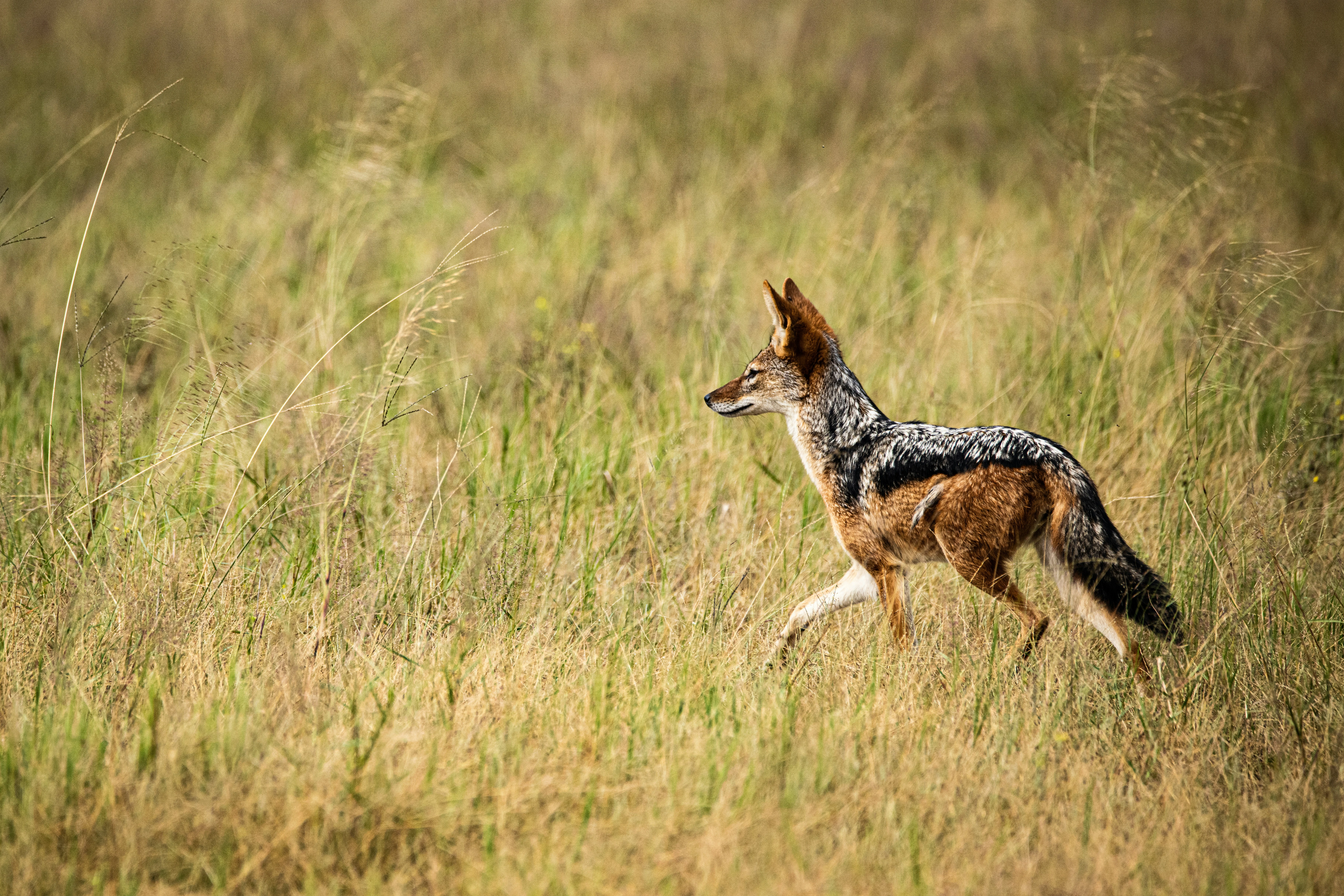
The black backed jackal stands as one of Africa’s most adaptable and intelligent carnivores. This medium-sized predator thrives in environments where many other hunters struggle to survive. Distinguished by a distinctive dark saddle marking across its back and flanks, this species has mastered the art of survival through remarkable behavioral flexibility and opportunistic hunting strategies.
Found primarily across eastern and southern Africa, these resilient hunters have developed sophisticated social structures. Their hunting techniques allow them to compete successfully with larger predators while avoiding direct confrontation. The black backed jackal has evolved to dominate arid and semi-arid regions where resourcefulness matters more than size.
Unlike their relatives the side striped jackal, which prefers wetter habitats, the black backed jackal thrives in drier conditions. Side striped jackels demonstrate different feeding behaviors and habitat preferences. Understanding this species provides crucial insights into ecosystem dynamics and predator-prey relationships. It also reveals the remarkable adaptability that allows certain species to flourish despite increasing human encroachment.
Physical Characteristics and Identification
Distinctive Markings and Body Size
The black backed jackal possesses several distinctive features that make identification relatively straightforward. Adult specimens typically measure between 96 to 110 centimeters in total length. The tail accounts for approximately 26 to 40 centimeters of this measurement.
Males generally weigh between 7 to 13 kilograms. Females tend toward the lighter end of this spectrum, ranging from 6 to 10 kilograms. This size difference becomes noticeable when observing breeding pairs together.
Coat Coloration and Camouflage
The most recognizable feature remains the broad black saddle extending from the neck to the tail base. This dark marking contrasts sharply against russet or tan sides and flanks. The coloration provides excellent camouflage in the mixed landscapes these animals inhabit. It effectively breaks up their outline against grasslands and scrubland.
The underbelly displays lighter cream or white coloring. The legs maintain the same reddish-tan hue as the sides. This color pattern serves both concealment and thermoregulation purposes.
Facial Features and Sensory Adaptations
Facial features include large, pointed ears that provide exceptional hearing capabilities. These ears prove essential for detecting prey movements and potential threats. The muzzle appears relatively long and slender compared to other canids. A dark nose and keen eyes reflect amber or yellow in certain lighting conditions.
Young jackels display less pronounced saddle markings initially. These markings darken and become more defined as they mature into adulthood. The transition typically completes within the first year of life.
Geographic Distribution and Habitat Preferences
Continental Range and Population Separation
Two distinct populations of black backed jackal exist across the African continent. These populations are separated by approximately 900 kilometers. The southern population occupies regions throughout South Africa, Namibia, Botswana, Zimbabwe, and southern Angola.
The eastern population ranges through Kenya, Tanzania, Somalia, Ethiopia, Eritrea, Djibouti, and Sudan. This unusual distribution pattern has puzzled researchers for decades. Some scientists propose that historical climate changes created barriers that separated ancestral populations.
Habitat Flexibility and Elevation Range
These adaptable predators demonstrate remarkable habitat flexibility. They occupy environments ranging from coastal areas at sea level to mountainous regions exceeding 2,700 meters in elevation. This broad elevation tolerance contributes significantly to their overall success.
They show particular success in savannas, grasslands, bushveld, and semi-desert environments. In these habitats, prey availability remains relatively consistent throughout the year. Agricultural areas increasingly attract these opportunistic hunters as well.
Environmental Preferences Compared to Related Species
Unlike the side striped jackal, which gravitates toward moist woodland and forested regions, the black backed jackal thrives in drier conditions. These areas may lack water sources for extended periods. The side striped jackal requires higher rainfall and different vegetation types.
This ecological separation reduces direct competition between the two species. In areas where their ranges overlap, both species can coexist through resource partitioning. Different habitat preferences and prey specializations maintain this balance.
Social Structure and Behavior Patterns
Monogamous Pair Bonds and Territory Defense
The social organization of black backed jackals revolves around monogamous pair bonds. These partnerships often last for life, a relatively rare trait among mammalian carnivores. Mated pairs defend exclusive territories ranging from one to four square kilometers.
Territory size depends on prey availability and environmental conditions. These territories are marked through scent marking, vocalizations, and direct confrontation with intruding individuals. Both partners share responsibility for defense activities.
Cooperative Defense Strategies
Territory defense involves both males and females equally. During confrontations, paired individuals demonstrate coordinated behavior. One animal often distracts an intruder while the mate approaches from another angle.
This cooperative defense strategy allows smaller jackals to successfully repel larger single individuals. Superior tactics overcome physical disadvantages. Coordination and communication prove more valuable than size alone.
Family Groups and Helper Systems
Family groups occasionally expand beyond the breeding pair. Offspring from previous litters sometimes remain in the territory as helpers. These juvenile helpers assist with pup-rearing, territory defense, and hunting activities.
They gain valuable experience before establishing their own territories. Research indicates that breeding pairs with helpers successfully raise larger litters. They also experience higher pup survival rates compared to pairs without assistance.
Communication Methods and Vocalizations
Communication among black backed jackals involves a sophisticated repertoire. Vocalizations, body language, and scent signals all play important roles. The characteristic howl serves multiple purposes throughout their daily activities.
These purposes include territory advertisement, mate location, and group coordination. Vocalizations carry for considerable distances across open habitats. Individuals can maintain contact even when separated by several kilometers.
Hunting Strategies and Dietary Flexibility
Opportunistic Feeding and Diet Composition
The hunting success of black backed jackal populations stems from exceptional dietary flexibility. While classified as carnivores, these adaptable predators function effectively as omnivores. They consume whatever food sources prove most abundant in their territory at any given time.
This flexibility provides crucial insurance against seasonal fluctuations in prey availability. Small mammals constitute the primary prey base. Rodents, hares, and ground-dwelling birds feature prominently in their diet.
Solitary Hunting Techniques
Hunting techniques vary based on prey type and environmental conditions. When pursuing rodents, jackals employ a distinctive pouncing behavior. They leap high into the air before descending on prey with front paws extended.
This technique mirrors hunting behaviors observed in foxes. It proves highly effective for capturing prey hidden in grass or shallow burrows. The element of surprise combined with precise timing ensures success.
Cooperative Hunting for Larger Prey
Larger prey items require different approaches entirely. Cooperative hunting between mated pairs or family groups becomes necessary. When targeting young antelope such as springbok, impala, or duiker fawns, jackals demonstrate sophisticated coordination.
One individual may distract the mother while another attacks the vulnerable offspring. Pairs may also take turns pursuing prey until exhaustion allows for a successful kill. This teamwork multiplies their effective hunting capabilities.
Scavenging Behavior and Risk Assessment
Scavenging represents another crucial component of their feeding strategy. This behavior proves particularly important in areas with high concentrations of larger predators. Black backed jackals regularly attend lion, leopard, and cheetah kills.
They wait for opportunities to steal meat when the primary predator moves away or becomes distracted. They demonstrate remarkable boldness at carcasses. Some approach within meters of feeding lions to snatch pieces of meat before retreating to safety.
Seasonal Dietary Shifts
Seasonal dietary shifts reflect changing food availability throughout the year. During summer months when insects are abundant, termites and dung beetles may comprise significant portions of their diet. Wild fruits, berries, and other plant materials receive increased attention during dry seasons.
Animal prey becomes scarce during these challenging periods. Omnivorous flexibility allows jackals to maintain body condition even during difficult times. This adaptability stresses more specialized predators that cannot adjust their diets.
Reproduction and Life Cycle Development
Breeding Seasons and Timing
Breeding in black backed jackal populations follows seasonal patterns. These patterns link directly to prey availability and environmental conditions. In southern Africa, mating typically occurs between May and August.
Pups are born after a gestation period lasting approximately 60 to 65 days. Eastern populations show slightly different timing. They often breed during the latter part of the dry season to ensure pups emerge as prey becomes more abundant.
Den Selection and Maternal Preparation
Dens serve as critical resources for successful reproduction. They provide protection for vulnerable pups during their first weeks of life. Breeding pairs select den sites carefully with multiple criteria in mind.
Females favor locations in abandoned aardvark burrows, rocky crevices, or dense vegetation. These sites offer concealment and multiple escape routes. Females may maintain several alternative den sites within their territory.
They move pups between locations if disturbance or predation risk increases. This flexibility enhances pup survival significantly.
Litter Size and Early Development
Litter sizes range from one to nine pups. Four to six represents the typical number for healthy females in good condition. Pups emerge completely helpless with eyes closed.
They depend entirely on maternal care during early weeks. Both parents participate in pup-rearing activities. Females provide the majority of direct care during the first few weeks through nursing and den attendance.
Parental Care and Provisioning
The male’s role becomes increasingly important as pups mature. Males take primary responsibility for provisioning food once pups begin consuming solid meat. This transition occurs around four to five weeks of age.
Adult jackals demonstrate remarkable dedication to their offspring. They make numerous hunting trips throughout the day and night. Growing pups require adequate nutrition for proper development.
Helper offspring, when present, contribute significantly to this provisioning effort. They increase the amount of food delivered to the den substantially.
Weaning and Skill Development
Weaning completes around eight to ten weeks of age. Pups continue receiving supplemental food from adults for several additional months. Young jackals begin accompanying adults on hunting trips at approximately three months of age.
They learn essential hunting skills through observation and practice. This extended learning period proves crucial for developing sophisticated hunting techniques. These skills become necessary for successful independent survival.
Sexual Maturity and Dispersal Patterns
Sexual maturity arrives at approximately 11 months of age. Most individuals do not breed until securing a territory and mate. This milestone may not occur until two or three years of age.
Some offspring remain in their natal territory for extended periods. They serve as helpers rather than dispersing immediately to find their own territories. This delayed dispersal strategy allows young jackals to develop skills and experience in a familiar environment.
They eventually face the challenges of establishing new territories with better preparation.
Interactions with Other Predators and Competitors
Navigating a Dangerous Landscape
The black backed jackal navigates a complex landscape of predator relationships. Constant vigilance and strategic decision making help them avoid becoming prey. Lions, leopards, hyenas, and African wild dogs all pose significant threats.
These larger predators view jackals as both competitors and potential prey items. Opportunities for attacks arise when jackals become careless or distracted.
Encounters with Lions at Carcasses
Encounters with lions typically occur at carcasses where jackals attempt to scavenge. These interactions demand careful assessment of risk versus reward. A momentary lapse in attention can result in a fatal attack.
Experienced jackals demonstrate sophisticated understanding of lion behavior. They recognize when these larger predators are satiated and less likely to expend energy. Hunger makes lions more dangerous and aggressive toward potential competitors.
Leopard Threats and Anti-Predator Behavior
Leopards present perhaps the greatest direct threat to jackal survival. These solitary hunters actively prey on medium-sized mammals including jackals. The overlap in habitat preferences and activity patterns brings these species into regular contact.
Jackals respond to leopard presence with heightened alarm calling. Increased vigilance becomes necessary in known leopard territories. They often mob detected leopards to drive them from the immediate area.
This behavior also alerts other prey species to the danger. Community defense benefits multiple species simultaneously.
Competition with Spotted Hyenas
Spotted hyenas represent formidable competitors for food resources. This competition intensifies particularly in areas where both species rely heavily on scavenging. A single jackal cannot compete directly with a hyena in terms of strength.
Pairs or family groups occasionally succeed in harassing hyenas sufficiently to steal portions of meat. These interactions require precise timing and coordination. Jackals dart in to grab food while other family members distract or harass the larger predator.
Coexistence with Other Canids
Competition with other canids remains relatively minimal due to ecological separation. The side striped jackal and various fox species occupy different niches. Where ranges overlap, different habitat preferences reduce direct resource competition.
The side striped jackal’s preference for wetter environments creates natural separation. Their more frugivorous diet also differs from the black backed jackal’s dry-adapted lifestyle. This partitioning allows multiple species to coexist successfully.
Adaptations for Survival in Challenging Environments
Water Conservation Mechanisms
The success of black backed jackal populations across diverse and often harsh environments reflects numerous adaptations. These adaptations developed through evolutionary pressures over millennia. Water conservation mechanisms allow jackals to survive extended periods with minimal direct water intake.
They obtain sufficient moisture from prey items and plant materials. Physiological adaptations minimize water loss through efficient kidney function. Reduced respiration rates during periods of rest further conserve precious water.
Behavioral Thermoregulation Strategies
Behavioral adjustments also contribute to water conservation efforts. Jackals seek shade during peak heat hours when water loss accelerates. They concentrate activity during cooler morning and evening periods.
This timing reduces water loss through respiration significantly. Temperature management becomes crucial for survival in arid environments.
Temperature Regulation Adaptations
Thermoregulation strategies address the significant temperature variations characteristic of their habitats. Daytime heat may exceed 40 degrees Celsius in some regions. Nighttime temperatures can drop considerably during certain seasons.
The relatively large ears serve dual purposes effectively. They provide exceptional hearing while also functioning as heat radiators. Increased surface area rich in blood vessels dissipates excess body heat efficiently.
During cold periods, jackals curl into tight balls. Their bushy tails cover their faces, minimizing heat loss through behavioral thermoregulation.
Enhanced Sensory Capabilities
Sensory adaptations provide crucial advantages for detecting prey and avoiding predators. Hearing ranks among their most developed senses overall. Large mobile ears can detect faint sounds from considerable distances.
This auditory acuity allows jackals to locate prey moving beneath vegetation or underground. It also provides early warning of approaching threats from any direction. Vision and olfaction also contribute to their sensory awareness.
Together, these senses create a comprehensive perceptual system for navigating their environment safely.
Conservation Status and Human Interactions
Current Population Status
Current populations of black backed jackal remain relatively stable across most of their range. The species is classified as Least Concern by international conservation assessments. However, this overall stability masks significant regional variations.
Emerging threats warrant continued monitoring and management attention. Local populations face different pressures depending on human activities and environmental conditions.
Human-Wildlife Conflict Dynamics
Human-wildlife conflict represents the most significant challenge facing jackal populations. This problem intensifies particularly in areas where livestock farming occurs within their range. Predation on sheep, goats, and poultry generates negative attitudes among farmers and pastoralists.
Persecution through shooting, poisoning, and trapping often follows. While jackals do occasionally kill livestock, particularly young or weak animals, research suggests problems are overstated. The extent of predation is often overestimated significantly.
Scavenging of already-dead animals is frequently misinterpreted as predation by farmers.
Disease Management Concerns
Disease transmission represents another concern in areas where jackals interact with domestic dogs and livestock. Rabies poses risks to both human health and wildlife conservation. Jackals serve as potential vectors in some regions.
Disease management programs that include vaccination campaigns help reduce transmission risks. These programs target both domestic and wild canids. The approach maintains ecosystem integrity while protecting public health.
Habitat Modification Impacts
Habitat loss through agricultural expansion, urbanization, and development impacts some jackal populations. Despite these pressures, the species demonstrates remarkable adaptability to human-modified landscapes. Agricultural areas may actually support higher jackal densities than natural habitats in some cases.
Irrigation and cultivation create favorable conditions for rodent prey species. However, increased association with human activities often escalates conflict and persecution. The relationship between habitat modification and population outcomes remains complex.
Cultural Perceptions and Conservation Outcomes
Cultural perceptions vary significantly across the species’ range. These variations influence local attitudes and conservation outcomes substantially. Some communities view jackals as clever, adaptable survivors worthy of respect.
Others regard them primarily as pests to be eliminated. Conservation efforts increasingly focus on education and outreach programs. These initiatives promote coexistence strategies that benefit both humans and wildlife.
They demonstrate methods for protecting livestock while maintaining viable jackal populations.
Ecological Importance and Ecosystem Functions
Mesopredator Regulation Services
The ecological role of black backed jackal extends far beyond their position as mid-sized predators. They encompass numerous functions that influence ecosystem structure and processes. Mesopredator regulation represents a crucial ecosystem service provided by jackals.
They prey heavily on rodents and other small mammals. These prey species can reach pest proportions when not controlled. In agricultural systems, this natural pest control potentially reduces crop damage and disease transmission.
Economic Benefits Through Pest Control
Economic benefits often go unrecognized by farmers focused on livestock conflicts. Research in various African farming regions has documented significant rodent population suppression. Areas with intact jackal populations show lower pest densities.
This compares favorably to areas where jackals have been eliminated. A single jackal may consume hundreds of rodents annually. This consumption significantly impacts agricultural pest populations.
Scavenging and Nutrient Cycling
Scavenging behavior accelerates nutrient cycling in ecosystems. Jackals remove carrion that might otherwise decompose slowly or accumulate. This cleanup function reduces disease risk substantially.
It deprives pest species like flies of breeding resources. Nutrients return to the ecosystem more rapidly through jackal waste products. In ecosystems with reduced populations of specialized scavengers like vultures, jackals become increasingly important.
These opportunistic feeders fill critical ecological niches.
Seed Dispersal Contributions
Seed dispersal occurs as a secondary consequence of their omnivorous diet. Jackals consume fruits and deposit seeds in their feces. Often these seeds land at considerable distances from parent plants.
This dispersal service benefits plant species significantly. It contributes to vegetation diversity and distribution patterns across landscapes. Research has identified numerous plant species whose seeds remain viable after passing through jackal digestive systems.
Some seeds show improved germination rates compared to seeds that fall directly beneath parent plants.
Prey Population Management
Prey population regulation through predation helps maintain ecosystem balance. This prevents herbivore populations from exceeding carrying capacity. Vegetation resources avoid degradation through this regulation mechanism.
While jackals target primarily smaller prey species, their cumulative impact proves significant. These populations influence vegetation patterns, invertebrate communities, and broader ecosystem dynamics. Cascading ecological effects extend throughout food webs.
Research Insights and Scientific Understanding
Genetic Studies and Evolutionary History
Scientific investigation of black backed jackal ecology has expanded significantly over recent decades. Multiple long-term research projects across their range have generated valuable insights. These studies inform both conservation management and broader understanding of carnivore ecology.
Genetic research has illuminated the evolutionary history and population structure of this species. Studies confirm that the geographically separated populations show measurable genetic differentiation. They remain part of a single species despite this separation.
Research suggests that population separation occurred relatively recently in evolutionary terms. The split likely happened within the last several thousand years. Climate shifts altered habitat connectivity across central Africa during this period.
Behavioral Ecology and Cognitive Abilities
Behavioral ecology studies have revealed sophisticated decision-making processes. These processes underlie their hunting strategies and social interactions. Experiments examining their response to human-generated risks provide interesting results.
Studies on competitor presence and prey availability demonstrate cognitive abilities comparable to domestic dogs. High intelligence adapted for solving complex environmental challenges appears evident. These cognitive capabilities likely contribute significantly to their success in human-modified landscapes.
Rapid learning and behavioral flexibility provide crucial advantages in changing environments.
Advanced Dietary Analysis Techniques
Dietary analysis using modern techniques provides increasingly detailed understanding. Stable isotope analysis and DNA metabarcoding reveal feeding ecology patterns. These methods also illuminate niche relationships with other predators.
Studies reveal seasonal and regional dietary variations that reflect local conditions. They demonstrate the pronounced dietary flexibility that characterizes this species. Such information proves valuable for predicting how populations might respond to environmental changes.
Targeted management interventions can be designed more effectively with this knowledge.
Disease Ecology Research
Disease ecology research examines the role of jackals in maintaining and transmitting various pathogens. Rabies, canine distemper, and various parasites receive particular attention. Understanding disease dynamics within jackal populations informs management strategies.
Disease transmission between jackals and other species requires careful study. This research informs vaccination strategies and outbreak prediction models. Risk assessment for both wildlife and domestic animal populations depends on this knowledge.
The research becomes increasingly relevant as human populations expand into wildlife habitats. Interfaces between wild and domestic species intensify with development.
Practical Coexistence Strategies for Landowners
Understanding Behavior for Better Protection
Successfully coexisting with black backed jackal populations requires understanding their behavior patterns. Implementing effective protective measures becomes easier with this knowledge. Maintaining realistic expectations about wildlife in shared landscapes also helps.
Landowners and pastoralists can employ numerous strategies that protect their interests. These methods allow jackal populations to persist simultaneously.
Guardian Animals for Livestock Protection
Livestock protection represents the primary concern for most farmers and pastoralists. Effective guardian animals, particularly certain dog breeds, provide excellent deterrence against jackal predation. Anatolian shepherds, kangals, and similar breeds bond with livestock naturally.
They actively defend them against predators without requiring constant human supervision. This protection significantly reduces losses without requiring lethal control. Proper training and management of guardian animals ensures optimal performance.
Minimal conflicts occur when these programs are implemented correctly.
Improved Husbandry Practices
Improved husbandry practices reduce predation vulnerability through various mechanisms. Housing pregnant females and young animals in secure enclosures during vulnerable periods eliminates many predation opportunities. Removing sick, weak, or dead animals promptly reduces scavenging opportunities.
This practice prevents attracting jackals into close proximity with healthy livestock. Maintaining appropriate livestock densities prevents overgrazing problems. Overgrazing reduces vegetation cover and makes prey more vulnerable to detection and capture.
Non-Lethal Deterrent Systems
Non-lethal deterrents including lights, sounds, and visual stimuli can reduce jackal activity in specific areas. Proper implementation and regular modification prevent habituation. Motion-activated lights prove particularly effective for protecting poultry houses and small livestock enclosures.
Nighttime hours when jackals are most active receive special protection. However, jackals eventually habituate to static deterrents. Regular changes in type, position, or activation patterns maintain effectiveness over time.
Economic Support Through Compensation Programs
Compensation schemes and insurance programs help offset losses when they do occur. This reduces economic incentives for retaliatory killing. Well-designed programs verify losses through independent assessment.
They provide timely payment and incorporate incentives for implementing preventative measures. Such programs work best when combined with technical assistance. This support helps landowners improve protective practices and reduce future losses.
Targeted Removal of Problem Animals
Selective removal of problem individuals through professional wildlife control becomes necessary occasionally. This approach proves more effective and sustainable than broad-scale persecution. Documented livestock killers can be removed through targeted effort.
Overall population viability remains intact with this strategy. The approach requires accurate identification of problem animals. Professional implementation ensures efficiency and humaneness while avoiding counterproductive population disruptions.
Frequently Asked Questions
What is the difference between a black backed jackal and other jackal species?
The black backed jackal distinguishes itself from other species through several key features. The prominent dark saddle extending from neck to tail serves as the primary identifier. Preference for drier habitats separates them ecologically from relatives.
They maintain a more carnivorous diet compared to the side striped jackal. The side striped jackal displays vertical stripes on its flanks rather than a dark saddle. It inhabits wetter woodland environments and consumes more fruits and plant materials.
The golden jackal, found in North Africa and Asia, shows uniform golden coloration. It lacks distinctive markings entirely. Geographic ranges show minimal overlap between these species.
How do black backed jackals impact livestock farming operations?
Research indicates that black backed jackals occasionally prey on vulnerable livestock. Young sheep, goats, and poultry face the highest risk. However, actual predation rates are often lower than perceived by farmers.
Most losses occur when livestock management practices create opportunities. Leaving newborns unattended in open areas increases vulnerability. Failing to secure poultry at night invites predation attempts.
Studies examining stomach contents and kill sites provide important context. Scavenging of animals that died from other causes accounts for significant jackal-livestock associations. Farmers sometimes incorrectly attribute these deaths to predation when other factors were responsible.
What role do black backed jackals play in controlling pest populations?
Jackals provide substantial pest control services throughout their range. They consume large quantities of rodents, insects, and other animals that damage crops or spread disease. A single jackal may consume hundreds of rodents annually.
This consumption significantly suppresses populations that would otherwise cause economic losses. Rodents damage crops through direct consumption and contamination. Natural pest control becomes especially valuable in agricultural systems.
Chemical rodenticides pose environmental and health risks that biological control avoids. However, these benefits often go unrecognized by landowners. They focus primarily on occasional livestock conflicts instead.
How long do black backed jackals live in wild conditions?
Wild black backed jackals typically survive for six to eight years. Some individuals living in protected areas reach ages exceeding twelve years. Minimal human persecution allows these animals to approach their biological potential.
Mortality rates remain highest during the first year of life. Pup survival varies significantly based on several factors. Food availability, parental experience, and predation pressure all influence outcomes.
Adults face threats from larger predators, disease, vehicle collisions, and human persecution. These factors combine to limit average lifespan below biological potential. Captive individuals have survived beyond fourteen years.
This demonstrates the species’ longevity when mortality factors are minimized.
Are black backed jackal populations increasing or decreasing across Africa?
Overall population trends remain relatively stable across the continental range. Significant regional variation exists based on local conditions and management approaches. Some areas show population increases linked to agricultural expansion.
Farming creates favorable habitat and abundant prey in these regions. Other regions experience declines due to intensive persecution. Habitat loss or disease outbreaks also contribute to local declines.
The species’ adaptability and broad distribution provide resilience against localized problems. Viable continental populations persist despite regional challenges. Long-term monitoring continues to track population trends.
Conservation priorities are identified where intervention may become necessary.
Conclusion
The black backed jackal exemplifies the resilience and adaptability that allow certain species to flourish. Despite environmental challenges and human pressures, these predators maintain stable populations. Through sophisticated social structures, flexible hunting strategies, and remarkable physiological adaptations, they have secured their position across diverse African ecosystems.
Their success stems not from physical dominance but from intelligence and opportunism. The ability to modify behavior in response to changing conditions proves invaluable. From coastal regions to mountain highlands, these medium-sized predators demonstrate remarkable versatility.
Understanding this species provides valuable insights into carnivore ecology and human-wildlife conflict dynamics. It also reveals the ecosystem services provided by mesopredators. As African landscapes continue transforming through agricultural expansion, urbanization, and climate change, adaptability becomes increasingly important.
The black backed jackal will likely persist through the same flexibility that has sustained populations for millennia. Supporting their continued presence requires balancing conservation objectives with legitimate human concerns. Evidence-based management, effective conflict mitigation strategies, and appreciation for ecological contributions all prove essential.
The future of black backed jackal populations depends ultimately on human attitudes and management decisions. By implementing practical coexistence strategies, communities can successfully share landscapes with these resourceful predators. Recognizing ecosystem services helps justify their presence.
Maintaining ecological perspective on wildlife conflicts allows rational decision-making. Communities can protect their economic interests and cultural values while supporting biodiversity conservation. This balanced approach benefits both human and wildlife populations across shared landscapes.