Black-Backed Jackal: The Clever Survivor of Africa
Quick Summary: The black-backed jackal is a clever, adaptable predator that lives across parts of eastern and southern Africa. With its striking dark back, sharp senses, strong family bonds, and remarkable survival skills, this small carnivore plays an important role in the African wilderness.
Introduction: A Small Shadow in the African Wilderness
The black-backed jackal may not command the attention of a lion or an elephant, but this clever little predator has a fascinating story of its own.
Imagine a quiet African savannah just before sunset. Golden grass stretches towards the horizon. A herd of antelope grazes nearby, while distant birds call from the trees. Suddenly, a slender animal appears along the edge of the grassland.
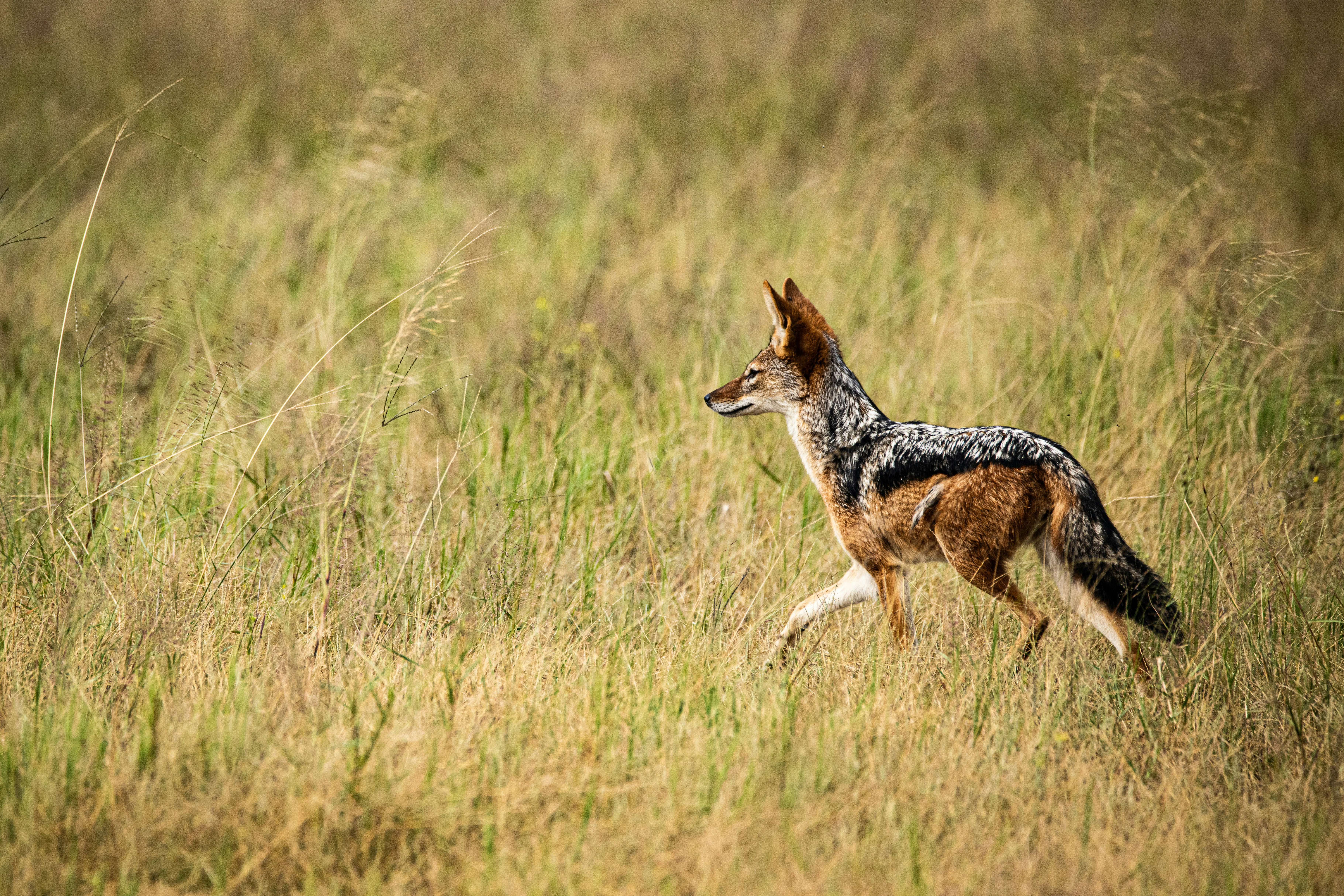
Its pointed ears stand alert. Its reddish coat catches the evening light. A dark saddle runs down its back, making it easy to recognize. It pauses, listens, and then moves forward with a quiet confidence.
This is the black-backed jackal, one of Africa’s most adaptable wild animals.
I find the jackal especially fascinating because it survives through intelligence, patience, and flexibility rather than size or strength. It does not need to dominate the savannah. Instead, it knows how to make the most of its surroundings.
For safari travelers, a black-backed jackal sighting offers a chance to appreciate the smaller predators that help keep Africa’s ecosystems healthy.
Let’s explore the life of this remarkable animal, from its family relationships to its hunting skills and its place in the wild.
What Is a Black-Backed Jackal?
The black-backed jackal is a medium-sized wild member of the dog family, Canidae. Its scientific name is Lupulella mesomelas. Some wildlife references still use the older name Canis mesomelas.
This species lives in two separate regions of Africa. One population occurs in eastern Africa, while another lives across southern Africa. The two populations remain geographically separated.
The black-backed jackal has a slender body, long legs, pointed ears, and a bushy tail. These features give it a fox-like appearance, although it belongs to a different group of wild canids.
The coat that gives it its name
The most striking feature of the black-backed jackal is its dark saddle-shaped marking.
This black or silver-black mantle stretches from the back of the neck towards the base of the tail. The reddish-brown coat along its sides creates a beautiful contrast.
Its ears remain upright, helping it detect the faint sounds of rodents moving through the grass. Its sharp teeth allow it to handle a wide range of food.
An adult black-backed jackal usually weighs around 6 to 12 kilograms, although size varies between individuals and populations.
Despite its small size, this animal has the confidence and skill of a seasoned survivor.
Where Does the Black-Backed Jackal Live?
The black-backed jackal thrives in a wide range of habitats. It can live in open savannahs, grasslands, scrublands, woodlands, semi-desert areas, and even some landscapes shaped by human activity.
Its adaptability helps explain why it remains widespread across much of its range.
Black-backed jackals in East Africa
In East Africa, the black-backed jackal occurs in countries such as Uganda, Kenya, Tanzania, Somalia, and parts of Ethiopia.
Uganda offers a rich variety of wildlife habitats. Open grasslands, woodland areas, and savannah ecosystems support many animals, including smaller carnivores.
During a wildlife safari, visitors often focus on elephants, lions, buffaloes, giraffes, and antelopes. However, smaller animals also deserve attention.
The black-backed jackal can appear while searching for food or moving through its territory. Its presence adds another interesting layer to the wildlife experience.
For visitors planning a Uganda safari, exploring destinations such as <a href=”https://steadysafaris.com/3-days-murchison-falls-safari“>Murchison Falls National Park</a> offers an opportunity to appreciate the country’s varied wildlife habitats.
A home built around survival
The jackal does not depend on one particular type of environment.
In dry areas, it can survive with limited access to water. In grasslands, it searches for rodents and insects. In more wooded habitats, it uses cover to avoid danger.
This flexibility gives the black-backed jackal an advantage when environmental conditions change.
It may rest in a burrow, a rock crevice, or a sheltered area among bushes. When danger approaches, it relies on speed, awareness, and its knowledge of the surrounding landscape.
The Daily Life of a Black-Backed Jackal
The black-backed jackal lives a life filled with careful decisions.
It must find food, protect its territory, avoid larger predators, and care for its young. Each day presents a new challenge.
A hunter of the early morning and evening
Black-backed jackals often become active during the cooler hours of the day.
Early morning and late afternoon provide good opportunities to search for food. In some areas, jackals also remain active at night.
Their activity patterns change according to temperature, food availability, and the presence of larger predators.
Imagine watching one move across a quiet grassland. It may stop suddenly, turn its ears towards the ground, and listen. A few seconds later, it leaps forward to catch a small animal hidden in the grass.
That quick movement reveals the jackal’s hunting ability.
Strong family relationships
Black-backed jackals often form long-term pairs. A male and female may share a territory and work together to raise their young.
Both parents help protect and feed the pups. In some families, older offspring also assist with the care of younger siblings.
This behavior gives the young jackals a better chance of survival.
A family may use a den to shelter its pups during their early weeks. The parents bring food and protect the young from potential threats.
The jackal’s family life reveals a softer side of an animal that people often describe only as cunning.
A voice that carries across the savannah
Have you ever heard a wild animal call in the darkness and wondered what it was saying?
The black-backed jackal produces a distinctive series of howls, yelps, and wailing calls. Family members may answer one another, while nearby jackals can join the chorus.
These sounds help animals communicate and maintain contact.
Jackals also use scent marking to establish territorial boundaries. They leave scent through urine and droppings, allowing other animals to recognize their presence.
Their communication system plays an important role in their social lives.
What Does a Black-Backed Jackal Eat?
The black-backed jackal has an opportunistic diet. It eats whatever suitable food it can find, although animal matter forms an important part of its diet.
This flexibility helps it survive in habitats where food availability changes throughout the year.
Small mammals and other prey
Rodents, hares, and other small mammals provide valuable food.
The jackal uses its sharp hearing to locate prey hidden beneath grass or soil. It may stalk its target before making a sudden leap.
It also eats birds, eggs, reptiles, amphibians, and insects.
When the opportunity arises, a jackal may hunt young antelope. Pairs can sometimes cooperate to capture prey that would prove difficult for one animal alone.
Fruits and other food sources
The black-backed jackal also eats fruits and other plant foods.
It may scavenge from the remains of animals killed by lions, leopards, or hyenas. This behavior allows it to obtain food without spending too much energy on a hunt.
In areas close to human settlements, jackals may also search through discarded food.
Their flexible diet helps them survive in changing environments.
However, this adaptability can sometimes bring them into conflict with people, particularly where livestock farming takes place.
The Clever Survival Skills of the Black-Backed Jackal
The black-backed jackal survives by combining intelligence, speed, and careful observation.
It rarely wastes energy on unnecessary movement. Instead, it searches for opportunities.
Knowing when to hunt and when to retreat
A jackal may live in an area shared by lions, leopards, hyenas, and other large predators.
These animals can pose serious threats.
The jackal must therefore remain alert. Its large ears help it detect sounds, while its keen sense of smell allows it to recognize danger.
When a larger predator approaches, the jackal may retreat quickly.
However, it does not always run away. Jackals sometimes gather and produce repeated calls when they mob larger carnivores. Their behavior may help drive a predator away from a particular area or alert other animals to its presence.
Making the most of every opportunity
The black-backed jackal does not always rely on a successful hunt.
It may search for insects, follow the movements of birds, investigate a carcass, or take advantage of an animal that has become vulnerable.
This ability to change its feeding strategy gives the species a major survival advantage.
The jackal’s success reminds me that survival in the wild often depends on making smart decisions rather than possessing the greatest strength.
The Important Role of the Black-Backed Jackal in the Ecosystem
Every animal in the African wilderness has a role to play.
The black-backed jackal helps maintain ecological balance in several ways.
First, it feeds on small mammals and other animals. This feeding behavior can help influence prey populations.
Second, it scavenges from carcasses left by larger predators. By consuming animal remains, it contributes to the natural process of decomposition.
Third, it may target weak, injured, or young animals when hunting opportunities arise.
These activities form part of the complex relationships that connect wildlife species.
The black-backed jackal does not work alone. Its life depends on the health of the wider ecosystem.
A healthy savannah supports prey animals, vegetation, water sources, and larger predators. Each part contributes to the survival of the others.
This is one reason I believe safari travelers should pay attention to smaller carnivores as well as the famous Big Five.
Black-Backed Jackal vs. Other African Jackals
Africa has several jackal species, and travelers may sometimes confuse them.
The black-backed jackal stands out because of its dark saddle and reddish coat.
The side-striped jackal usually has a more subdued coat, with pale stripes along its sides. It often prefers habitats with thicker vegetation and more moisture.
The golden jackal has a sandy or golden appearance. Its range and classification differ from those of the black-backed jackal.
Although these animals share some characteristics, their appearance, habitat preferences, and behavior can differ.
During a safari, paying attention to the animal’s coat, tail, body shape, and habitat can help with identification.
The black-backed jackal’s dark mantle remains its most reliable visual clue.
Seeing a Black-Backed Jackal on an African Safari
A black-backed jackal sighting can become one of those unexpected moments that make a safari memorable.
Visitors often hope to see large predators. Yet the appearance of a small carnivore can offer a different kind of excitement.
Where to look
Black-backed jackals occur in suitable habitats across parts of East and Southern Africa.
In Uganda, wildlife travelers can explore savannah landscapes and national parks that support a variety of mammals and birds.
A safari through <a href=”https://steadysafaris.com/“>Uganda’s wildlife destinations</a> provides opportunities to learn about the country’s rich natural heritage.
What to look for
When searching for a black-backed jackal, pay attention to the edges of grasslands and open areas.
Look for a slender animal with pointed ears and a dark marking along its back.
Early morning and late afternoon often provide favorable wildlife viewing conditions. However, sightings depend on the animal’s movements, habitat, and local conditions.
If you spot a jackal, give it space. Avoid loud noises, sudden movements, or attempts to attract its attention.
Responsible wildlife viewing allows animals to continue their natural behavior.
Threats and Conservation of the Black-Backed Jackal
The black-backed jackal has a wide distribution and adapts to many environments. Conservation assessments generally classify the species as Least Concern.
However, this status does not mean the animal faces no threats.
Human-wildlife conflict
Some farmers view jackals as a threat to livestock. In certain areas, people kill jackals to reduce livestock losses.
This conflict can place pressure on local populations.
Habitat changes and disease also affect jackals in some regions.
A balanced approach to conservation can help people protect livestock while allowing wildlife to survive.
For example, improved livestock protection and responsible land management may reduce conflict between people and predators.
Why conservation matters
The black-backed jackal forms part of Africa’s natural heritage.
Protecting wildlife habitats helps support the many species that depend on them.
Responsible tourism can also contribute to conservation by encouraging people to value wildlife and natural landscapes.
When travelers visit protected areas, they gain a better understanding of the importance of wildlife conservation.
Fascinating Black-Backed Jackal Facts
Here are some interesting facts about this remarkable animal:
- Scientific name: Lupulella mesomelas.
- Family: Canidae, the dog family.
- Distinctive feature: A dark saddle-shaped marking along its back.
- Distribution: Eastern and southern Africa.
- Diet: Small mammals, birds, insects, reptiles, fruits, and carrion.
- Social life: Often lives in pairs or family groups.
- Communication: Uses howls, yelps, scent marking, and body language.
- Habitat: Savannahs, grasslands, woodlands, scrublands, and semi-desert areas.
- Conservation status: Least Concern.
- Survival strategy: Adaptability, intelligence, and opportunistic feeding.
These facts show why the black-backed jackal deserves more attention from wildlife enthusiasts.
Conclusion: A Small Predator with a Big Role
The black-backed jackal may not have the size of a lion or the power of a leopard, but it remains one of Africa’s fascinating wildlife survivors.
Its distinctive appearance, clever hunting skills, strong family bonds, and adaptable lifestyle make it an important part of the African wilderness.
For me, the jackal represents the beauty of looking beyond the obvious.
A safari does not need to revolve only around the largest or most famous animals. Sometimes, the most interesting wildlife encounters happen when a small animal appears unexpectedly along the road.
The next time you explore an African savannah, keep your eyes open for the black-backed jackal. You may discover that this clever little predator has a story worth remembering.
Explore Uganda with Steady Safaris Limited
At Steady Safaris Limited, I believe every wildlife journey should bring travelers closer to the beauty of nature.
From the open savannahs of Murchison Falls National Park to the forests of Uganda, the country offers wonderful opportunities to explore wildlife, landscapes, and local cultures.
Whether you are planning a wildlife safari, a bird-watching trip, or a gorilla trekking adventure, Uganda has something special to offer.
Visit Steady Safaris Limited to start planning your African safari.
Discover Africa. Experience nature. Create lasting memories.